3168 Turner Street, Suite 300
Placerville, CA 95667



You’re brushing your teeth before work, and suddenly you see pink in the sink. Or maybe you bite into an apple and notice a metallic taste in your mouth. It’s easy to shrug it off. After all, gums bleed sometimes, right?
The truth is, occasional bleeding can be minor. But in certain situations, it may signal something more serious that needs immediate attention. Knowing the difference can protect your smile and your overall health.
If you live near Golden Grove Dental and notice gum bleeding that feels unusual, you may wonder whether you need an emergency dentist. This guide will help you understand when bleeding gums are harmless, when they point to gum disease or infection, and when it’s time to seek urgent care.
Is It Normal for Gums to Bleed?
Gums are a sensitive tissue. In some situations, mild bleeding can happen without indicating a serious issue.
For example, brushing too hard with a stiff toothbrush can irritate the gumline. If you’ve recently changed your brushing technique or started using a new toothbrush, minor bleeding may occur for a few days.
The same applies when you begin flossing after a long break. Gums that haven’t been flossed regularly may bleed slightly as they adjust to proper cleaning. This type of bleeding usually improves within a week as inflammation decreases.
Minor irritation from food particles stuck along the gumline can also cause temporary bleeding. In these cases, the bleeding is brief and stops quickly once the area is cleaned.
However, bleeding that persists, worsens, or occurs without provocation requires closer attention. If your gums bleed even when you’re not brushing or flossing, it’s time to take it seriously.
What Are the Most Common Causes of Bleeding Gums?
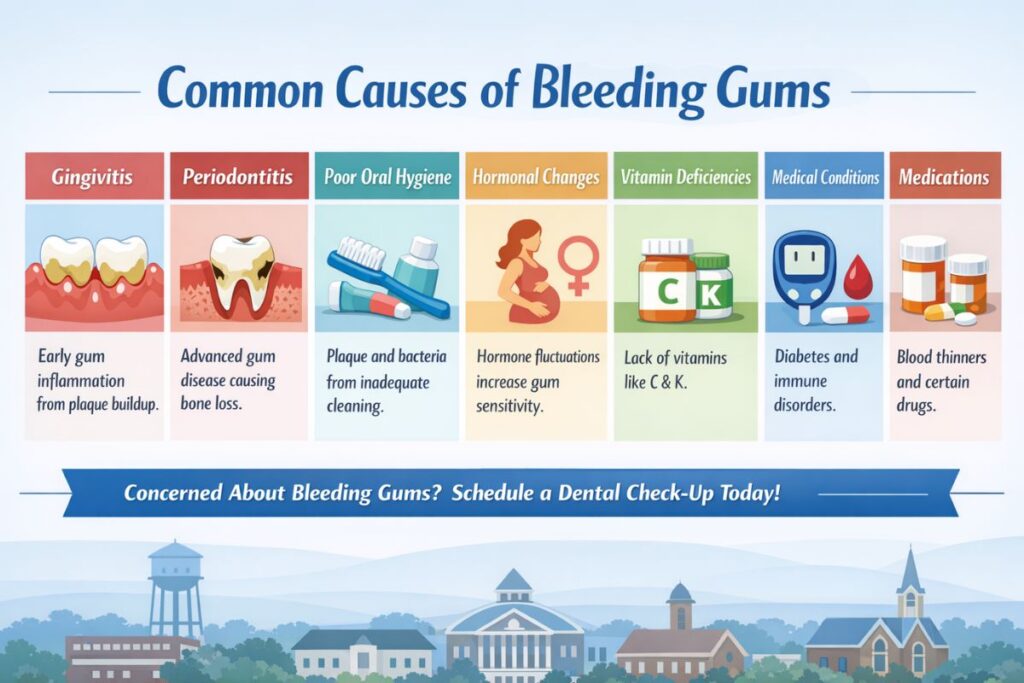
Understanding the root cause helps determine whether the situation is routine or urgent.
Gingivitis
Gingivitis is early-stage gum inflammation caused by plaque buildup. Gums may appear red, swollen, and bleed easily. At this stage, the condition is usually reversible with professional cleaning and improved home care.
Periodontitis
When gingivitis progresses, it can develop into periodontitis. This advanced gum disease affects the bone that supports your teeth. Bleeding becomes more frequent and may be accompanied by gum recession or loose teeth.
Poor Oral Hygiene
Plaque accumulation leads to chronic inflammation. Over time, bacteria irritate the gums, making them more prone to bleeding.
Hormonal Changes
Pregnancy, puberty, and hormonal fluctuations can increase gum sensitivity. Some people experience temporary gum bleeding during these phases.
Vitamin Deficiencies
Low vitamin C or vitamin K levels can weaken gum tissue and affect blood clotting, increasing the risk of bleeding.
Medical Conditions
Diabetes, blood disorders, and immune system issues may make gums more vulnerable to infection and bleeding.
Medications
Blood thinners and certain heart medications can increase the risk of bleeding, even from minor irritation.
When Is Bleeding Gums Considered a Dental Emergency?
Bleeding gums move from minor concern to urgent problem when specific warning signs appear. If you notice any of the following symptoms, prompt evaluation by an emergency dentist in Placerville is strongly recommended.
Persistent bleeding lasting more than 10 minutes
If steady pressure with clean gauze does not stop the bleeding within 10 minutes, it may signal deeper tissue damage or a clotting issue. Prolonged bleeding should never be ignored.
Swollen, painful gums
Significant swelling combined with throbbing pain often points to infection beneath the gumline. Infection can spread quickly if left untreated.
Pus or discharge
Visible pus along the gums is a clear sign of bacterial infection. This condition requires immediate professional care to prevent further complications.
Loose teeth
Teeth that suddenly feel unstable may indicate advanced periodontal disease affecting the supporting bone. Delaying treatment increases the risk of permanent tooth loss.
Severe gum recession
Rapid gum shrinkage that exposes tooth roots can lead to sensitivity and structural weakness. Sudden changes in gum position warrant urgent attention.
Facial swelling
Swelling in the cheeks, jaw, or under the eyes may suggest a spreading dental infection. Facial swelling can escalate into a serious medical issue.
Fever or signs of infection
A fever paired with gum bleeding often indicates your body is fighting an active infection. This combination requires immediate dental evaluation.
Bleeding after dental trauma
Uncontrolled bleeding following a fall, sports injury, or accident may involve damaged teeth or underlying bone. Seek care immediately to protect oral structures.
Could Bleeding Gums Indicate Something Serious?
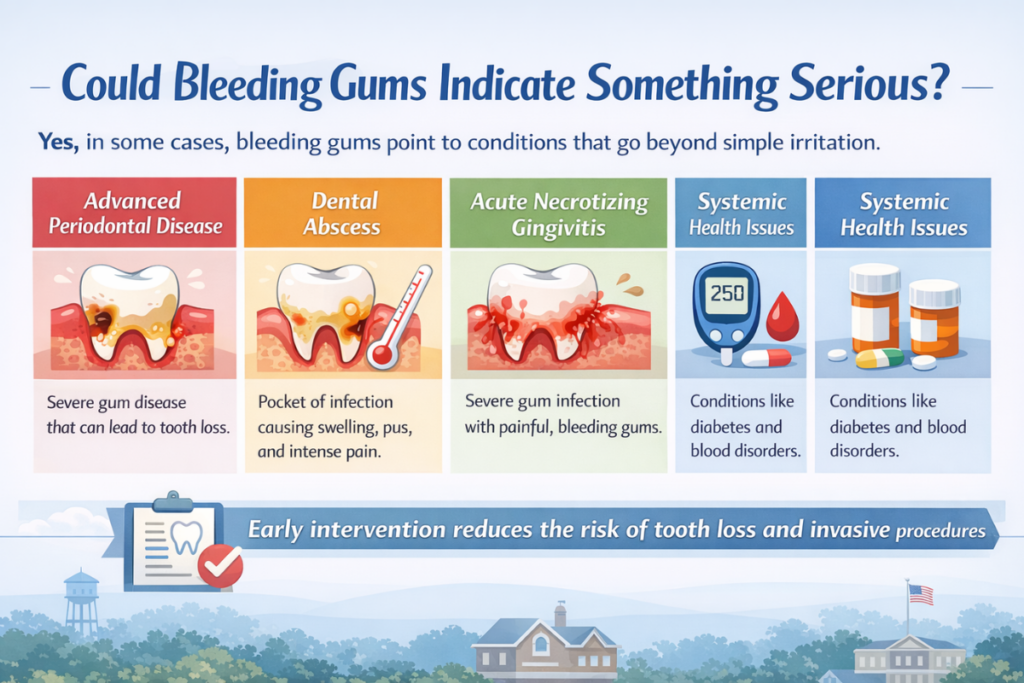
Yes, in some cases, bleeding gums point to conditions that go beyond simple irritation.
Advanced periodontal disease can destroy bone support and eventually lead to tooth loss. Early treatment helps preserve both teeth and surrounding structures.
A dental abscess is a pocket of infection that may cause swelling, pus, and intense pain. Without treatment, the infection can spread to other areas of the body.
Acute necrotizing ulcerative gingivitis is a severe gum infection marked by painful, bleeding gums and tissue breakdown. It requires immediate professional care.
Systemic health conditions, including uncontrolled diabetes or blood disorders, may also present with gum bleeding as a symptom.
The key is early intervention. Addressing the problem before it progresses significantly reduces the risk of tooth loss and more invasive procedures.
What Should You Do If Your Gums Start Bleeding Heavily?
Stay calm and take the following steps:
Rinse gently with warm salt water
This helps cleanse the area and reduce bacteria without irritating the tissue further.
Apply clean gauze with light pressure
Place sterile gauze over the area and apply steady pressure for several minutes.
Avoid aggressive brushing
Do not scrub the area. Gentle cleaning is sufficient.
Do not ignore persistent bleeding
If bleeding continues beyond a few minutes, seek professional guidance.
Seek emergency dental care if symptoms worsen
Increasing pain, swelling, or fever signals the need for immediate attention.
Prompt action can prevent minor issues from escalating into major concerns.
How Dentists Treat Emergency Gum Bleeding
At Golden Grove Dental, treatment begins with a comprehensive gum evaluation. The team assesses gum depth, bone support, and signs of infection.
If plaque and tartar buildup are contributing factors, deep cleaning through scaling and root planing removes bacteria beneath the gumline.
When an infection is present, antibiotic therapy may be prescribed to eliminate harmful bacteria. In severe cases involving advanced tissue damage, surgical intervention may be necessary to restore gum health. If teeth have loosened, stabilization techniques help preserve alignment and function.
Clear communication and step-by-step explanations ensure you understand each phase of care.
How to Prevent Emergency Gum Issues
Prevention remains the most effective strategy. Professional cleanings every six months remove hardened buildup that home care cannot reach. Daily flossing and proper brushing technique reduce inflammation and bacterial growth.
Treat early signs of gum redness or tenderness promptly rather than waiting. Managing systemic health conditions, including diabetes, supports healthier gum tissue.
Staying consistent with preventive care reduces the likelihood of sudden emergencies.
Warning Signs You Should Never Ignore
Certain symptoms should prompt immediate attention:
- Bleeding without brushing or flossing
- Persistent bad breath that does not improve
- Gum tenderness that worsens over time
- Receding gums exposing tooth roots
- Tooth mobility or shifting
If you notice any of these signs around our local community, especially during busy seasons when stress levels run high, do not delay evaluation. Early action by an emergency dentist in Placerville makes treatment simpler and more predictable.
Bleeding gums are not normal when they are persistent, painful, or accompanied by other symptoms. What starts as mild irritation can quickly progress if ignored.
Early treatment prevents complex procedures and protects your long-term oral health. If you experience uncontrolled bleeding or signs of infection, Golden Grove Dental offers timely care and same-day visits when available.
Do not wait if bleeding does not stop. Contact our office promptly and let our team evaluate your condition. Acting quickly today can save your smile tomorrow.
FAQs
How long should gum bleeding last before I worry?
Bleeding that continues longer than 10 minutes despite applying pressure should be evaluated. Ongoing or frequent bleeding requires professional attention.
Can stress cause bleeding gums?
Yes. Stress can weaken your immune response, increasing inflammation and making gums more prone to infection and bleeding.
Should I stop brushing if my gums bleed?
No. Gentle brushing and flossing help reduce inflammation. Avoid aggressive scrubbing, but maintain proper oral hygiene.
Can medications make my gums bleed more easily?
Yes. Blood thinners and certain heart medications can increase bleeding, even from minor irritation.
Can vitamin deficiencies cause gum bleeding?
Yes. Low levels of vitamin C or vitamin K may increase gum sensitivity and affect normal clotting.